Yellow-crested Cockatoo

Yellow-crested Cockatoo
-
Class
Aves -
Order
Psittaciformes -
Familly
Cacatuidae
-
 45-55 cm
 -
 815 to 975 g
 -
 25-27 days
 -
 2-3
2-3 -
 40 years (up to 65 y. in zoos)
-
Diet
seeds, fruits, buds -
Habitat
forests, cultivated croplands -
Range
Australia, Papua New Guinea, Indonesia -
Population in the wild
En diminution -
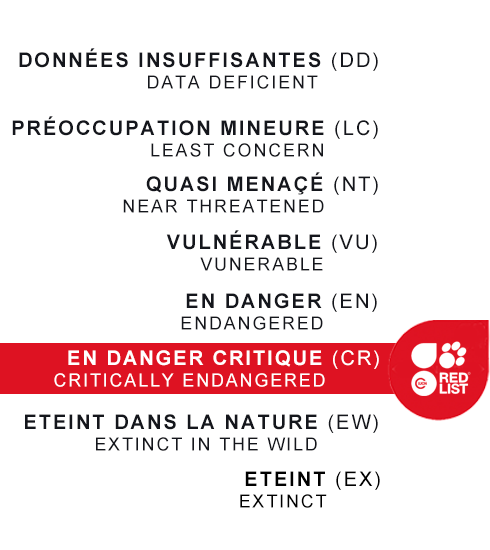
IUCN REDLIST status

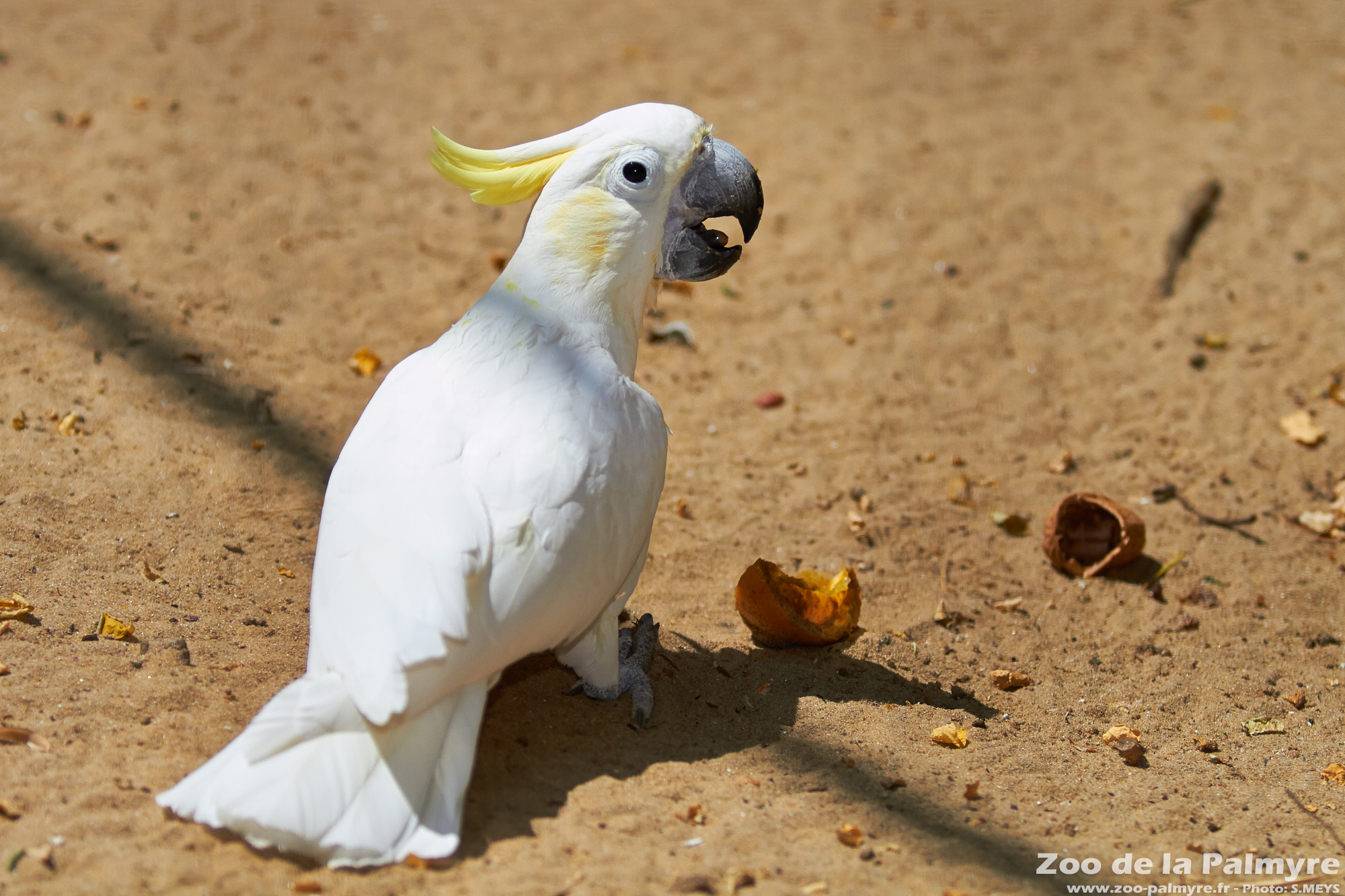
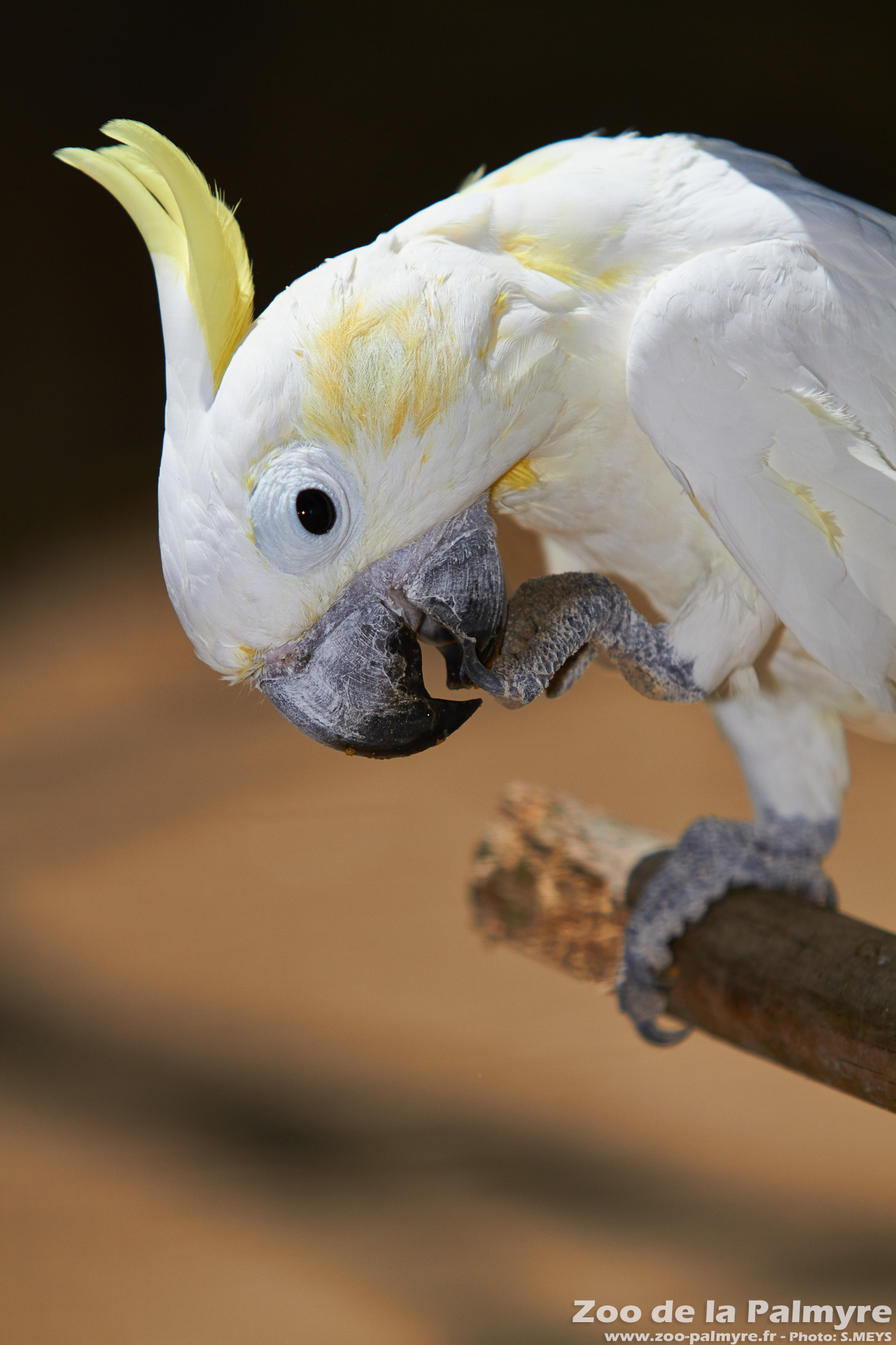
This large parrot native to Australia (one of the country's largest) measures 45 to 55 cm in length and features white plumage and a crest of six erectile yellow feathers. The crest is usually held folded down on top of head but rises when the bird is excited, danger is detected, or when performing a courtship display. Males and females are similar in appearance, though at close range the female can be distinguished by her red tinted brown eyes, whereas the male has darker brown eyes.
Often confused with the smaller Yellow-crested Cockatoo—which occupies a different range—this species frequents wooded habitats. It is also found in the vast savannas of northern Australia, as well as in suburban and urban areas, particularly in parks and gardens.
Sulphur-crested Cockatoos are gregarious birds that form flocks ranging from around twenty to sometimes several hundred individuals. These large gatherings split into smaller groups to forage before coming together again at their evening roost site. Primarily granivorous, the species feeds both on the ground and in trees. Its diet includes seeds, nuts, fruits, and buds, but it also raids cereal crops, targeting everything from newly sown seeds to ripening grain heads. While feeding, "sentinel" individuals perch in trees to watch for potential predators; if a threat arises, they let out a deafening alarm call.
During the breeding season, Sulphur-crested Cockatoos live in pairs or small family groups, while forming large flocks for the rest of the year. Pairs are territorial during the breeding season and nest at a considerable distance from one another. The nest consists of a bed of wood chips inside a tree hollow. The female lays two to three eggs, which are incubated by both adults. During this period and the following 6 to 10 weeks, the parents remain deliberately very quiet so as not to attract predators to their nest. The chicks stay in the cavity for 9 to 12 weeks and are fed by both parents. They remain with them for several months after fledging. Both males and females reach sexual maturity at around 4 or 5 years of age.
And in the wild