Newborn chimp!

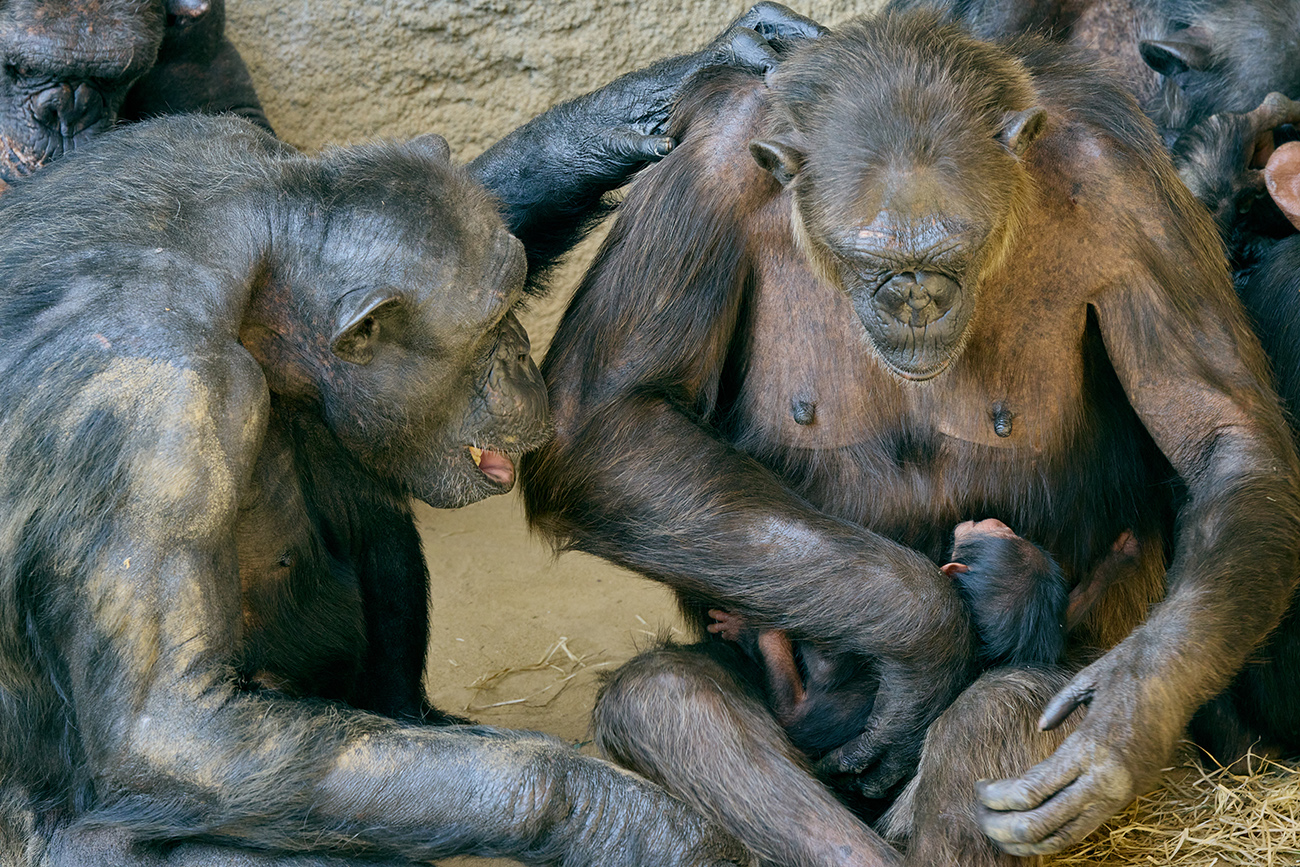
Our group of Central African chimpanzees recently welcomed a new baby with the birth of Flor's first infant. Flor is 15-year-old and had joined our troop at the end of 2023.
The newborn male is thriving thanks to his mother's careful attention. This is a source of great satisfaction for us as we systematically exercise extra vigilance with first-time mothers, especially during the first few days after the birth.
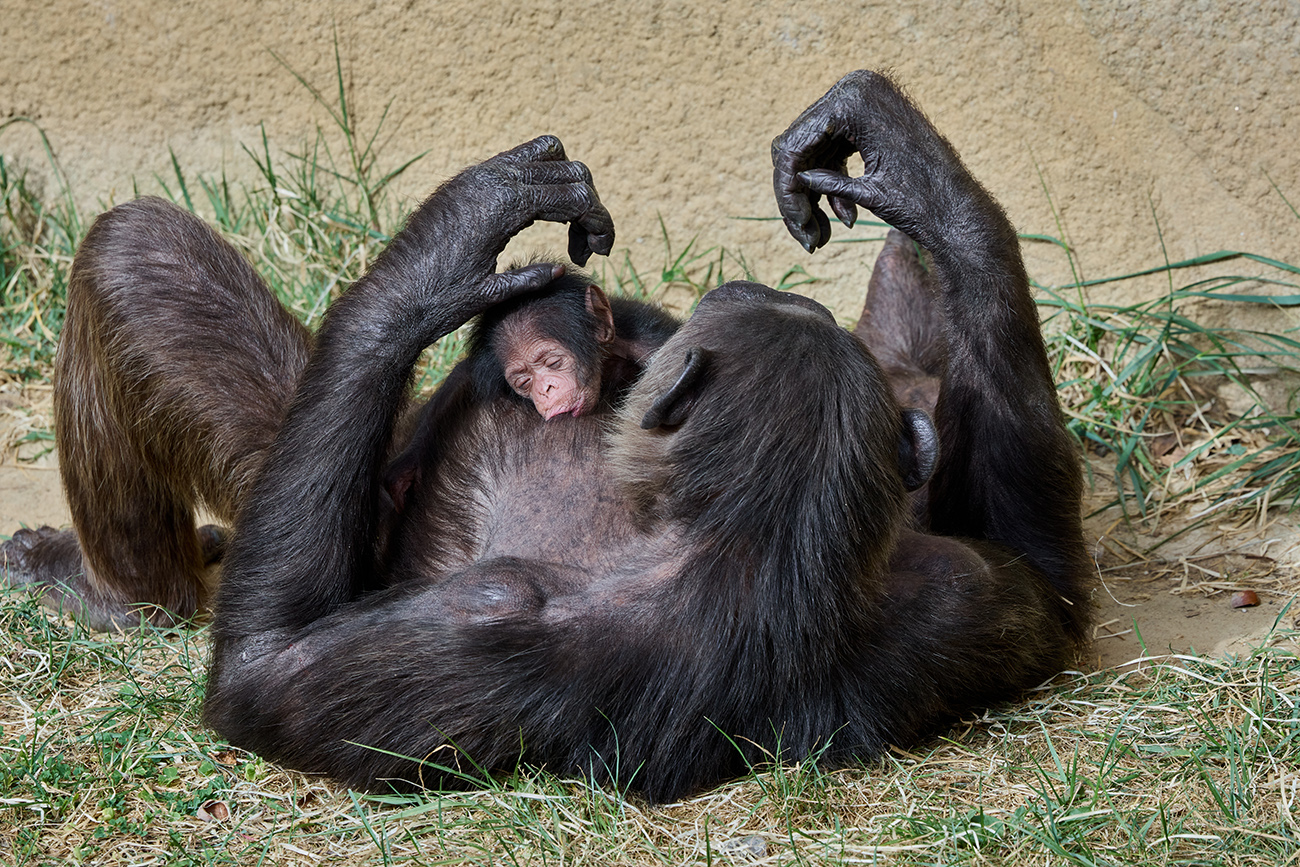
Indeed, the female's inexperience, combined with the considerable variation in maternal behavior within the species, does not always guarantee the first rearing to be successful. In Flor's case, learning to raise her infant was made easier by observing other females who had previously successfully raised their offspring: first in the zoo where she was born when she witnessed her mother raising her brother, and then by watching one of our female who has been raising a youngster since last year.
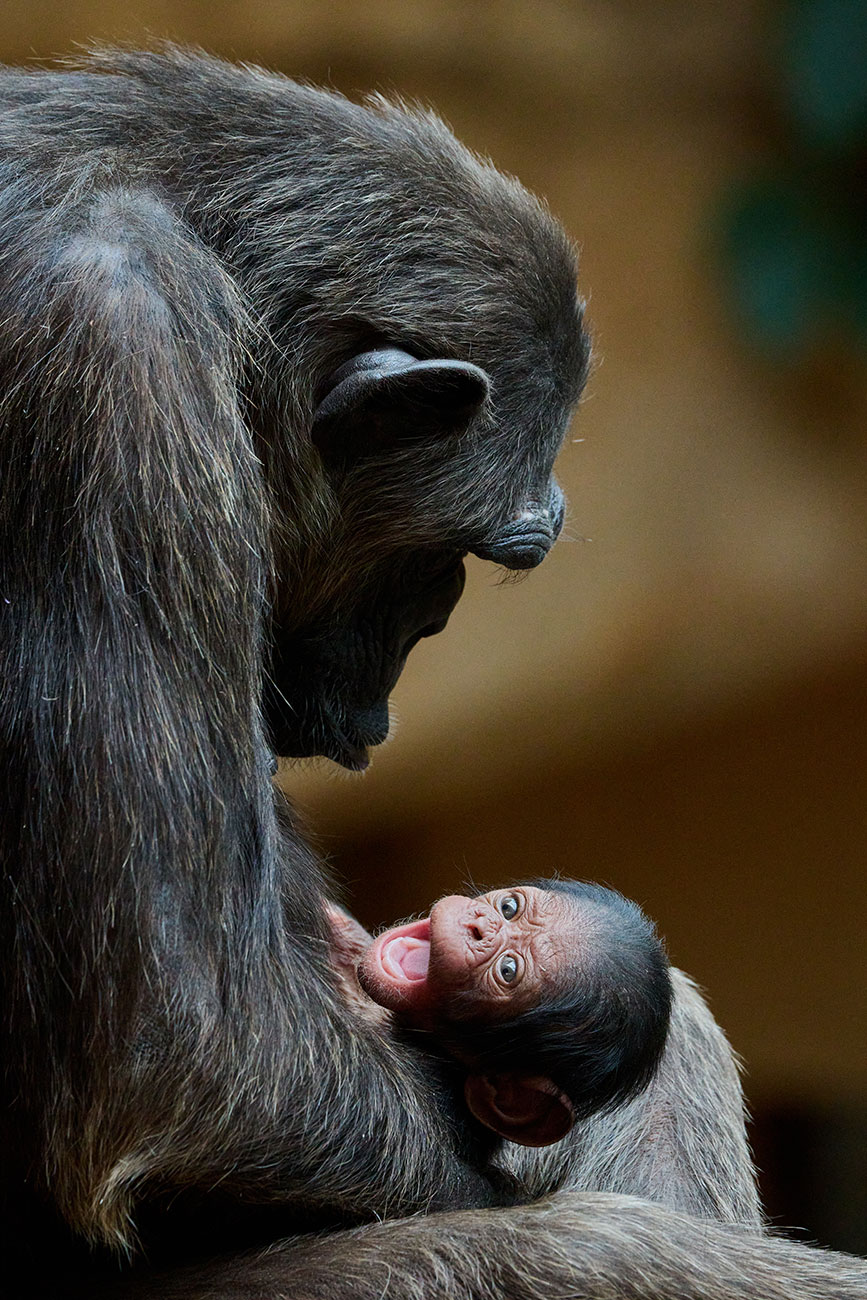
The young chimpanzee is completely dependent on its mother during the first years of its life. Clinging to her fur constantly, it relies on her for food, transportation, and protection. This very close relationship continues over time, with the mother playing a vital role in teaching social behaviors, foraging and selecting food, and interacting with other members of the community. This long learning period explains the species' slow reproductive rate, as a female chimpanzee gives birth to one offspring every 4 to 5 years.
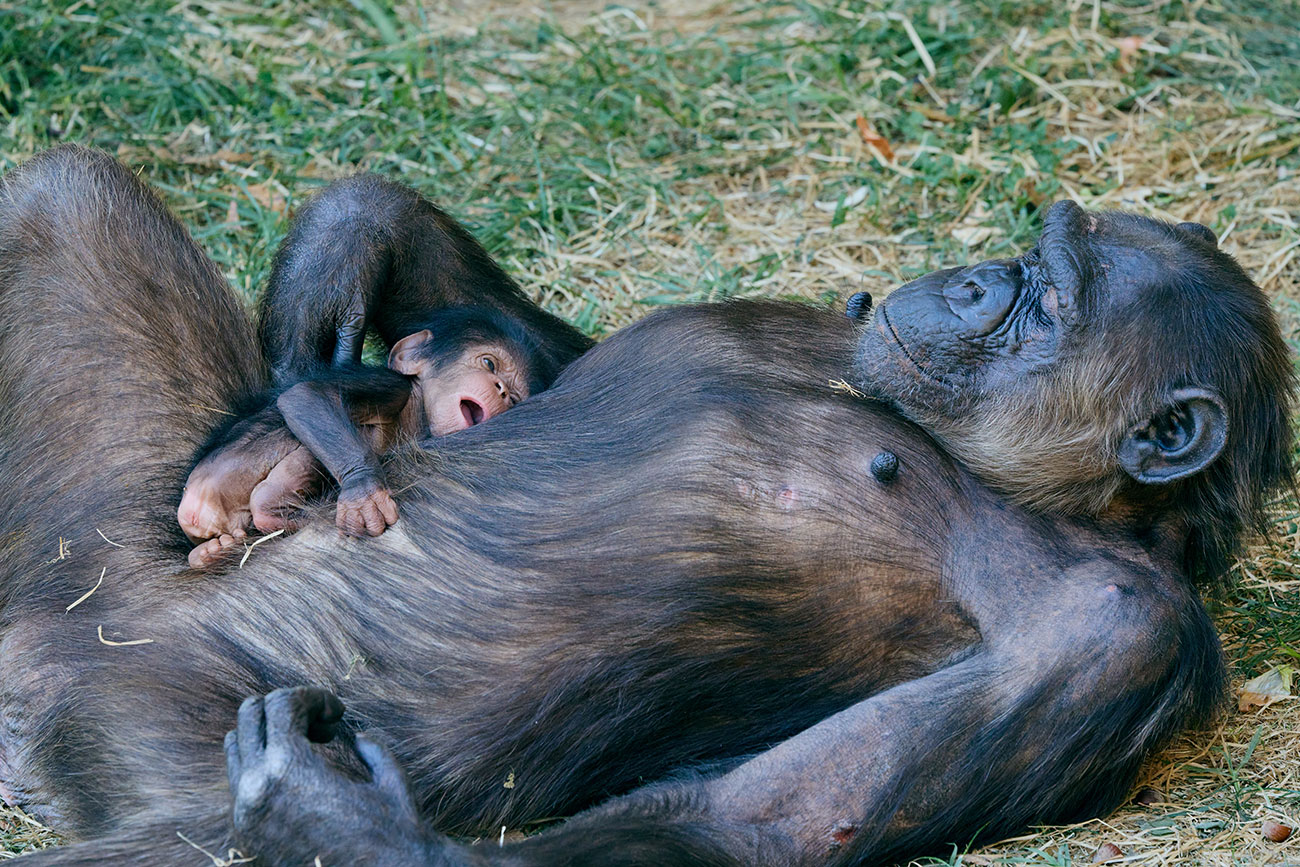
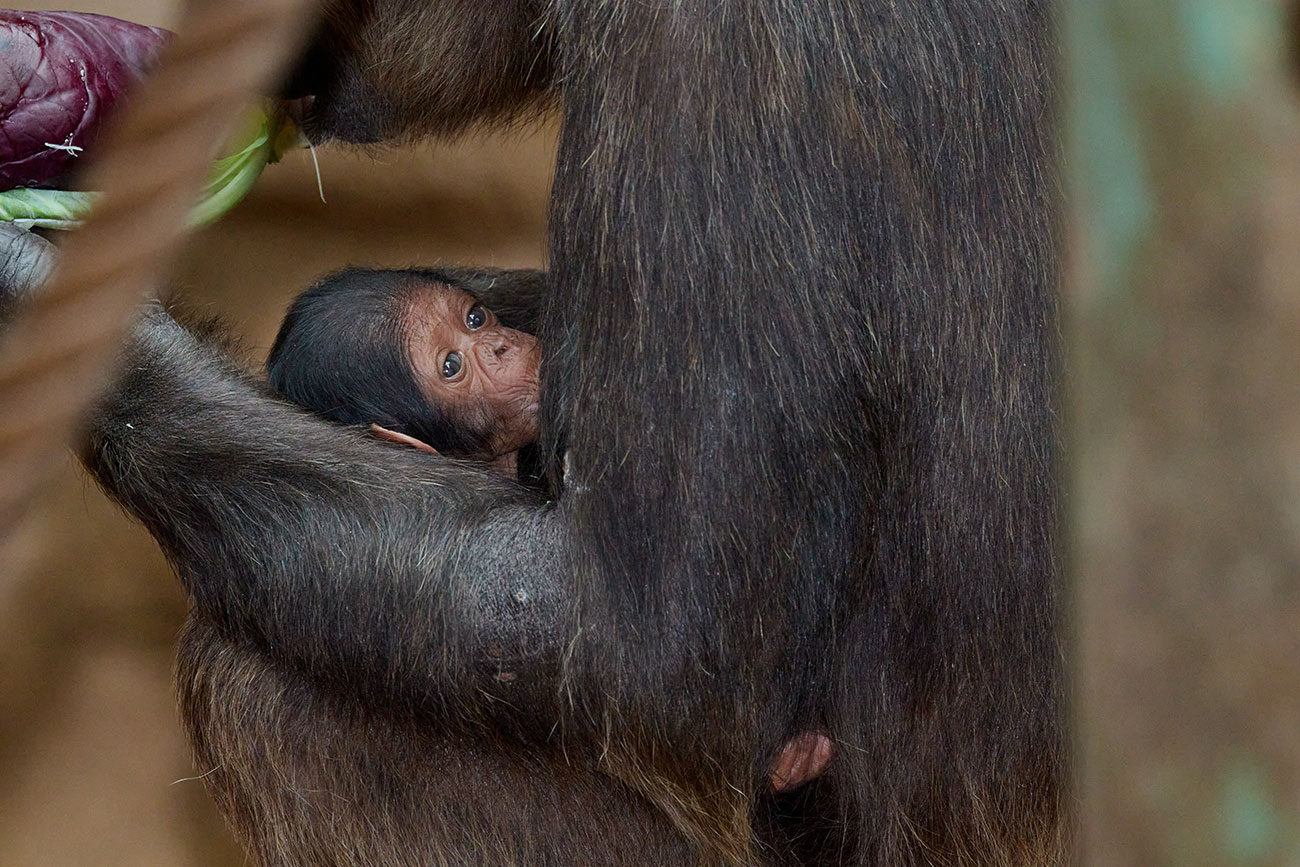
The birth of her first baby allows Flor to strengthen her integration within our group which now numbers 11 individuals and is the largest group of Central chimpanzees currently housed in a European zoo.
It also allows us to draw attention to the situation of this species in the wild: in Africa, chimpanzee populations are suffering from the destruction and fragmentation of forests, as well as record levels of poaching, particularly for the trafficking of babies. There are four subspecies of chimpanzee: the Western Chimpanzee, classified as Critically Endangered, the Central Chimpanzee, the Eastern Chimpanzee and the Nigeria-Cameroon Chimpanzee, all three classified as Endangered.
For nearly 15 years, La Palmyre Zoo and Palmyre Conservation have been funding the rehabilitation work carried out by the J.A.C.K. Sanctuary in Lubumbashi, DRC. They also provide occasional support for the rescue operations of illegally held chimpanzees conducted by the Pan African Sanctuary Alliance.
You can help us protect chimpanzees by donating to Palmyre Conservation: