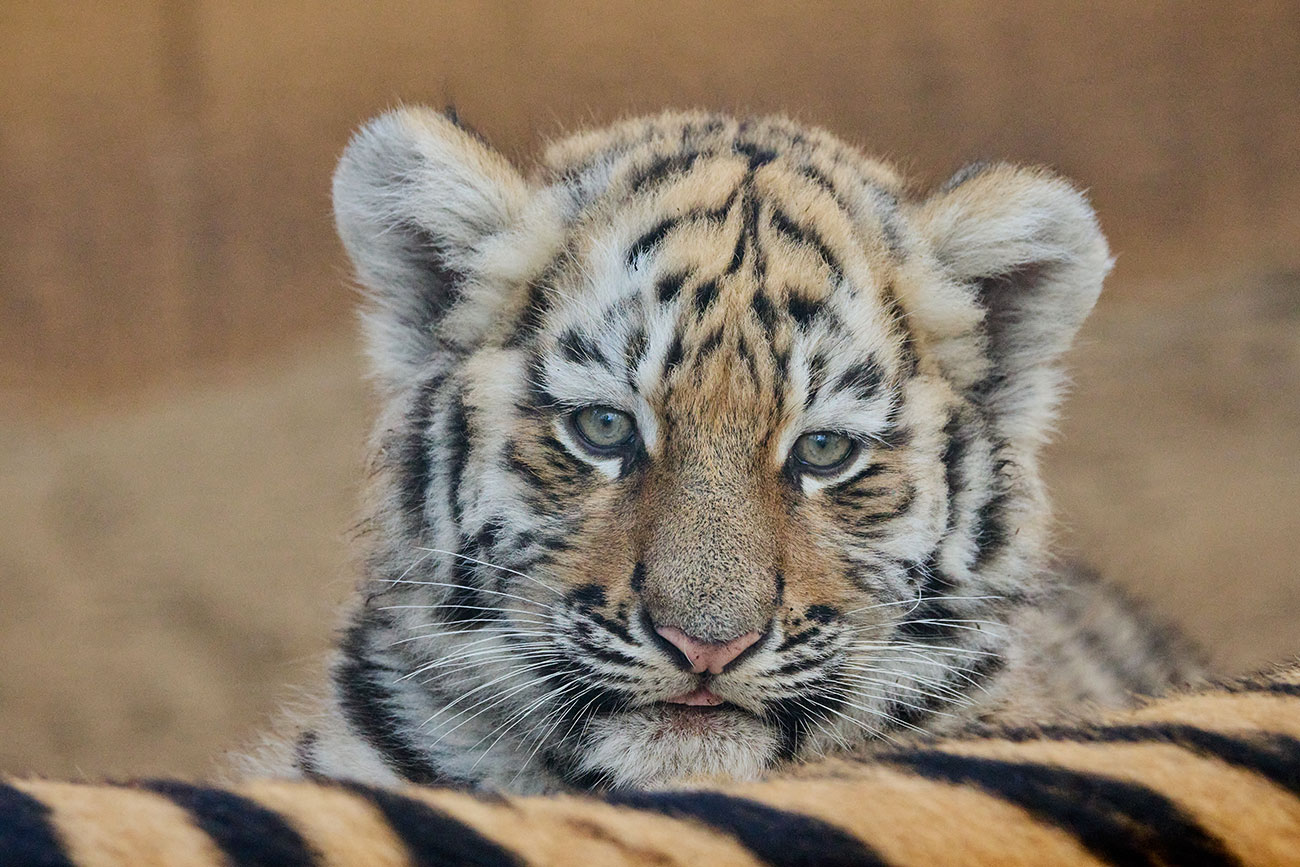
Exceptional birth of two Amur tigers!

This birth marks a significant milestone for the zoo, as it is the very first litter for our pair who arrived last year, and also the first successful breeding in our brand new tiger exhibit.
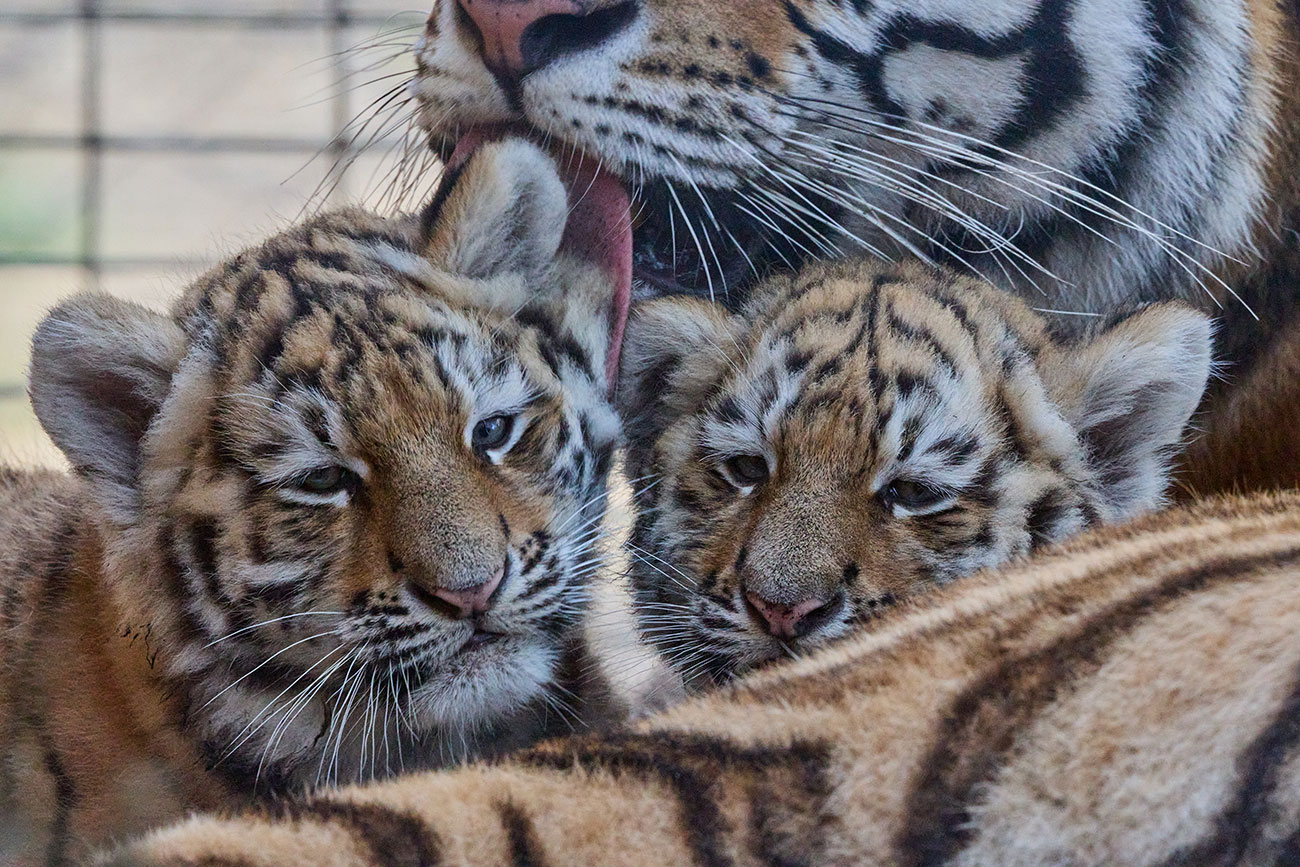
From the first hours after the birth, the keepers discreetly monitored the cubs to ensure the mother's peace while raising her youngs. Thanks to several cameras and a limited presence in the building, the animal care team was able to observe the cubs' development remotely.
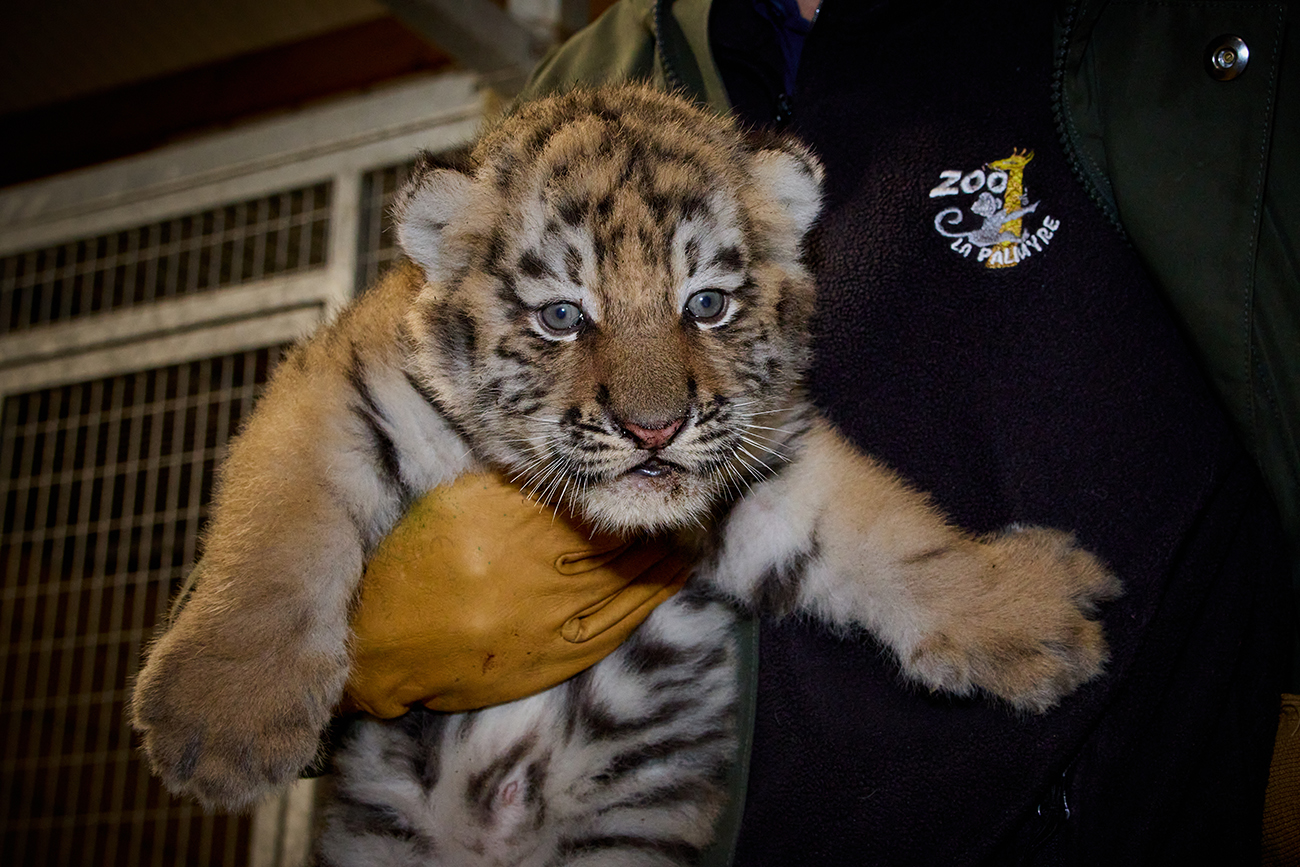
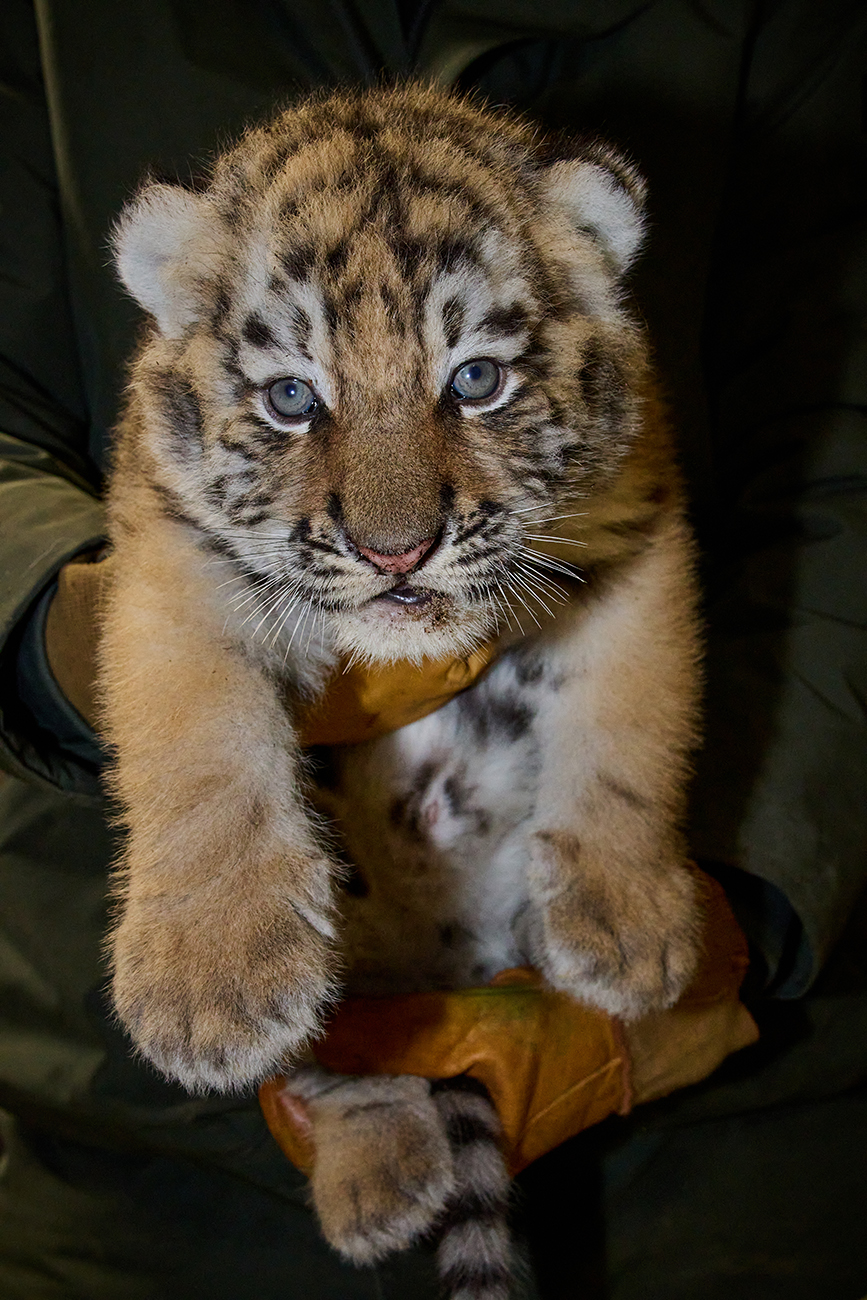
At six weeks old, the two tigers underwent their first veterinary health check: they were microchipped and vaccinated against common feline diseases. Their sex (both males) was also confirmed at this time. Their introduction to the male took place a few weeks later and went smoothly.
But one crucial step remained: going out and exploring the main enclosure! Curious but cautious, the two cubs initially stayed close to the building. They gradually grew bolder, exploring their new surroundings alongside their mother. Now three months old, they go out into the enclosure daily with their parents, alternating between exploration, play, and rest under their mother's watchful and protective gaze.
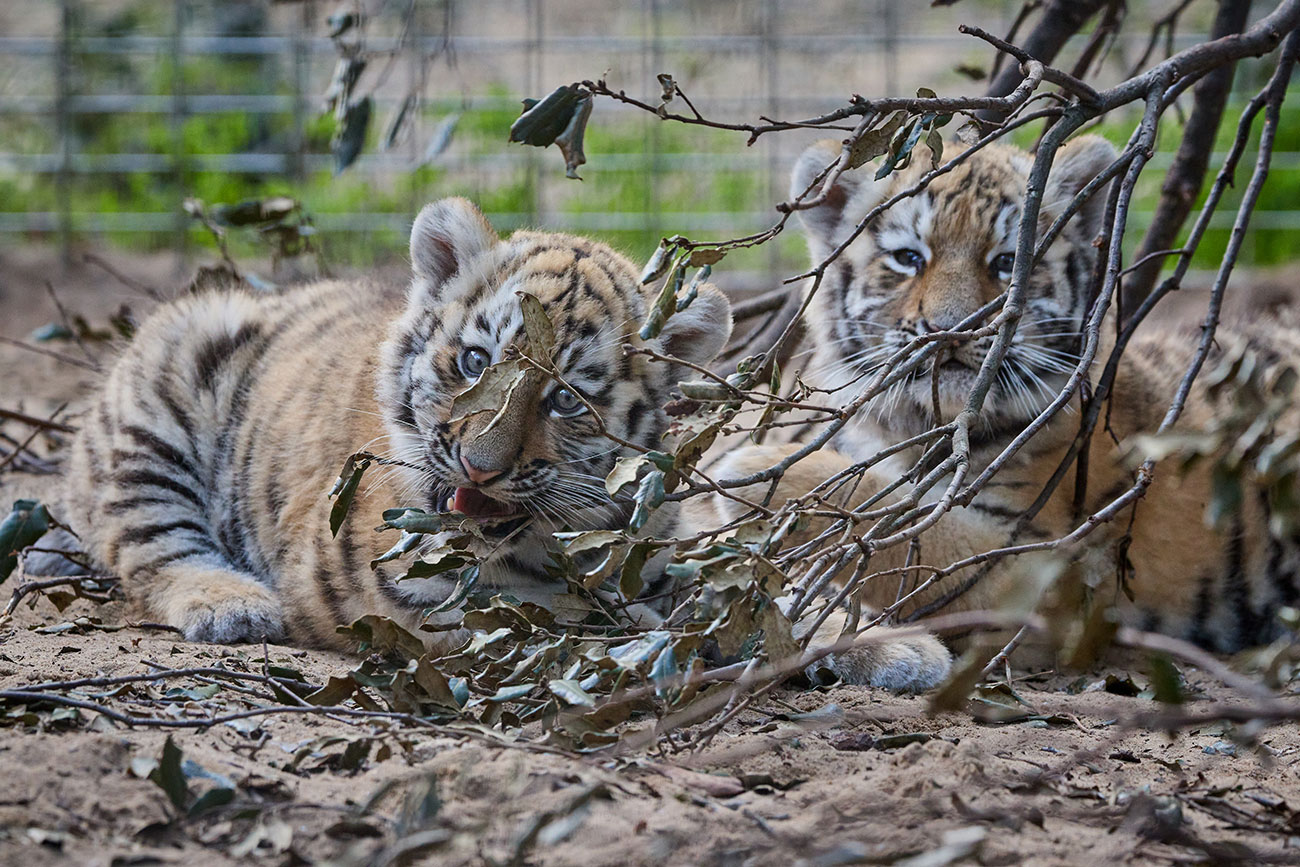
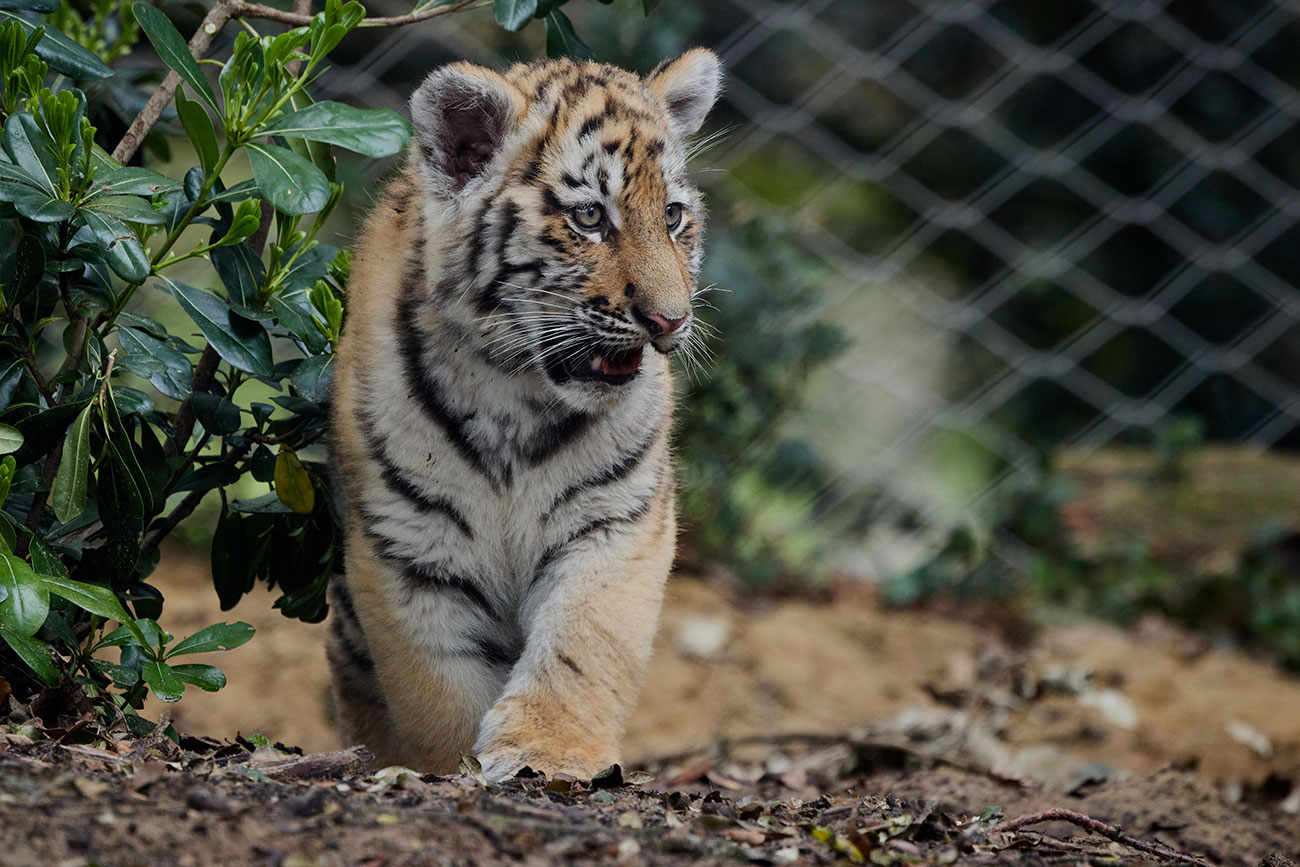
The Amur tiger, formerly known as the Siberian tiger due to its abundance in this northern part of Asia, is the largest of the six recognized subspecies. Sadly extinct in Siberia, it takes its new name from the Amur River, which flows through the heart of its current range, located between the Russian Far East and China. Sometimes exceeding 300 kg, it is distinguished from other subspecies by its lighter coat with fewer stripes, allowing it to blend more easily into its snowy winter habitat. Built for hunting, it stalks its prey by ambush and kills large ungulates such as deer, roe deer, and wild boar. Its territory extends over several hundred square kilometers, depending on the quality of the available habitat and the abundance of prey.
The female gives birth to two or three cubs after a gestation period of three and a half months. The young tigers are weaned at six months and become independent around 18 to 20 months of age, but they continue to hunt on their mother's territory for several months, until she gives birth to new cubs. They will then have to search for new territories.
Estimated at over 100,000 individuals at the beginning of the 20th century, the wild tiger population collapsed to just 3,200 individuals in 2010. Thanks to conservation efforts, the total number of tigers in the wild is now estimated at 4,500, but they occupy barely 8% of their original range across a dozen Asian countries. The threats behind this decline include poaching for the illegal trade in their body parts used in traditional Asian medicine, habitat loss and human encroachment leading to increased human-tiger conflict, and the depletion of their prey. The species is classified as Endangered on the IUCN Red List. Only 350 to 450 Amur tigers survive in the wild.