Endangered Lemur Twins born at the zoo!

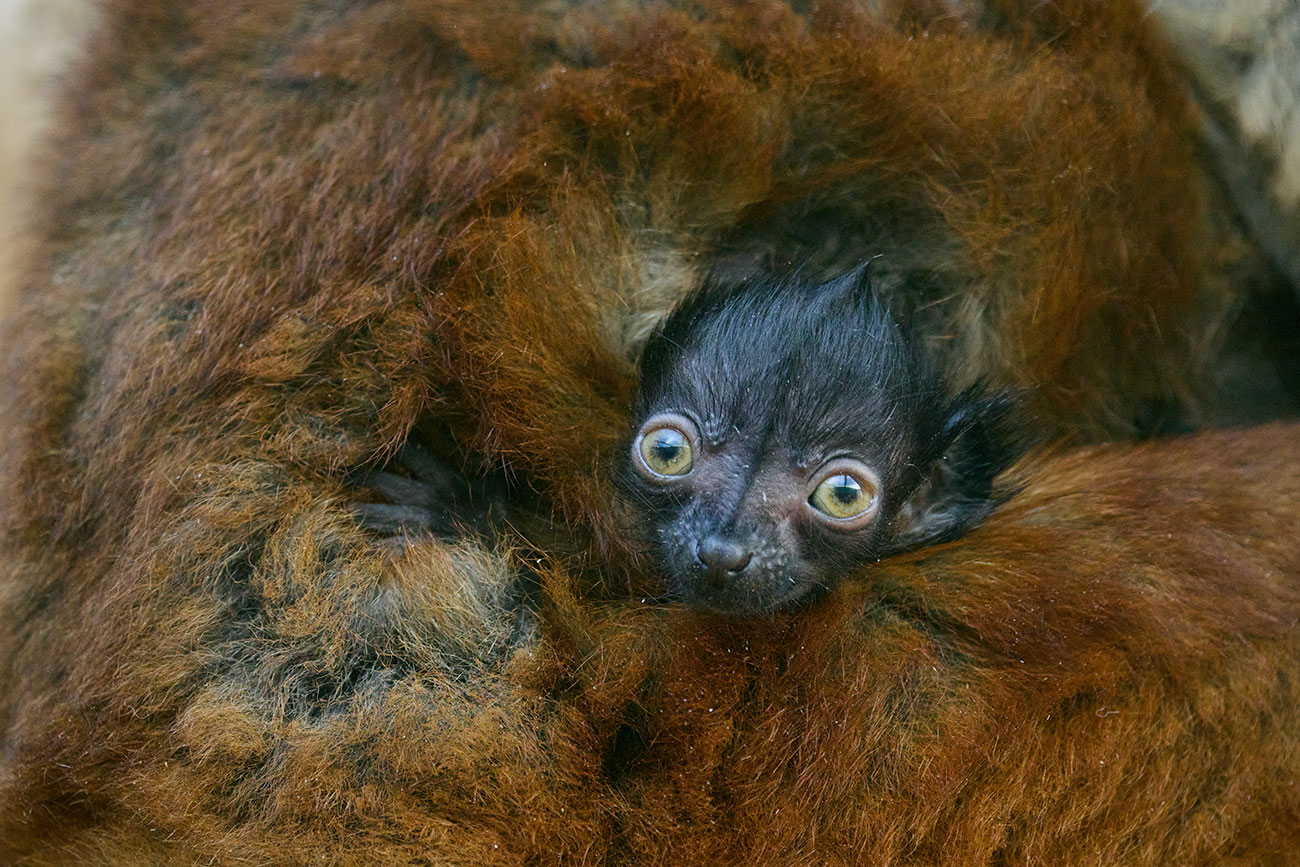
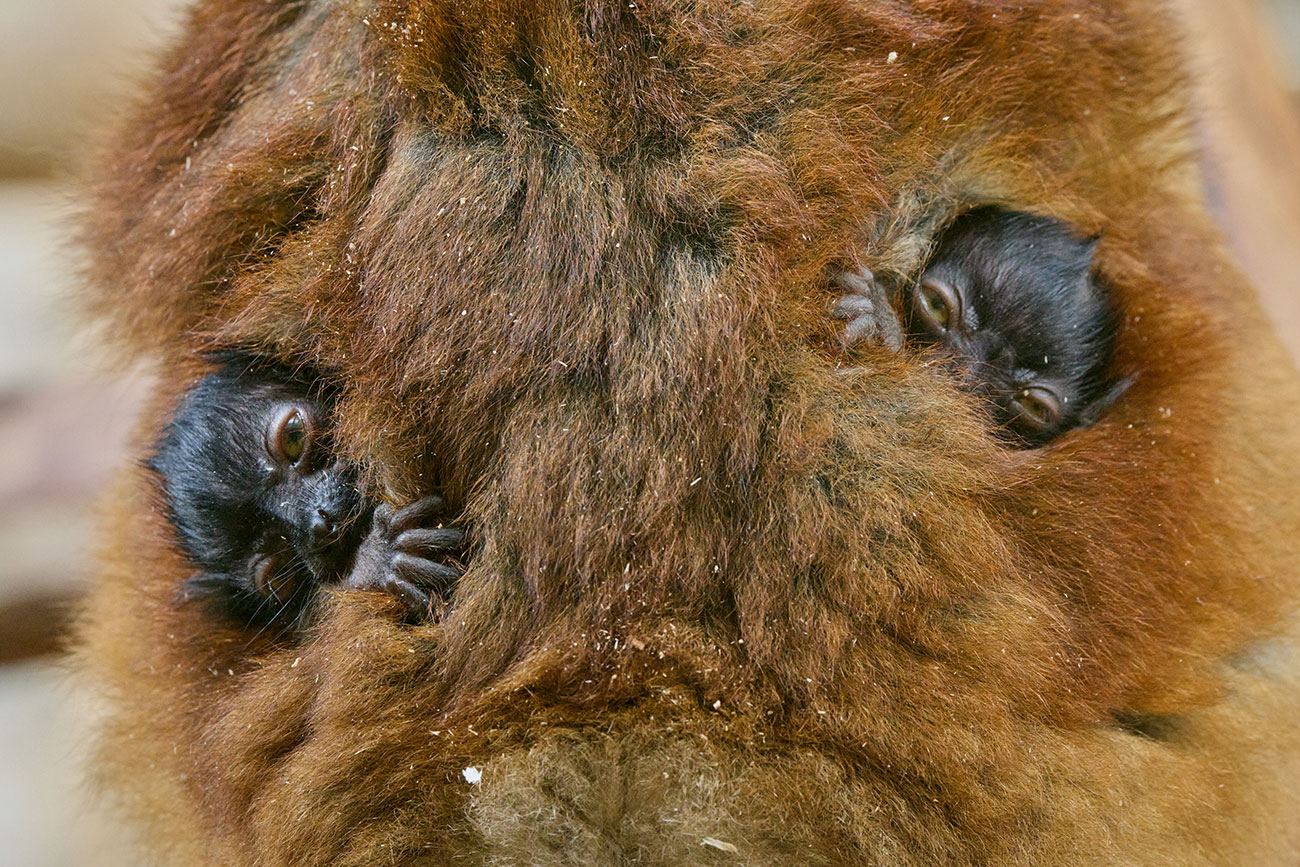
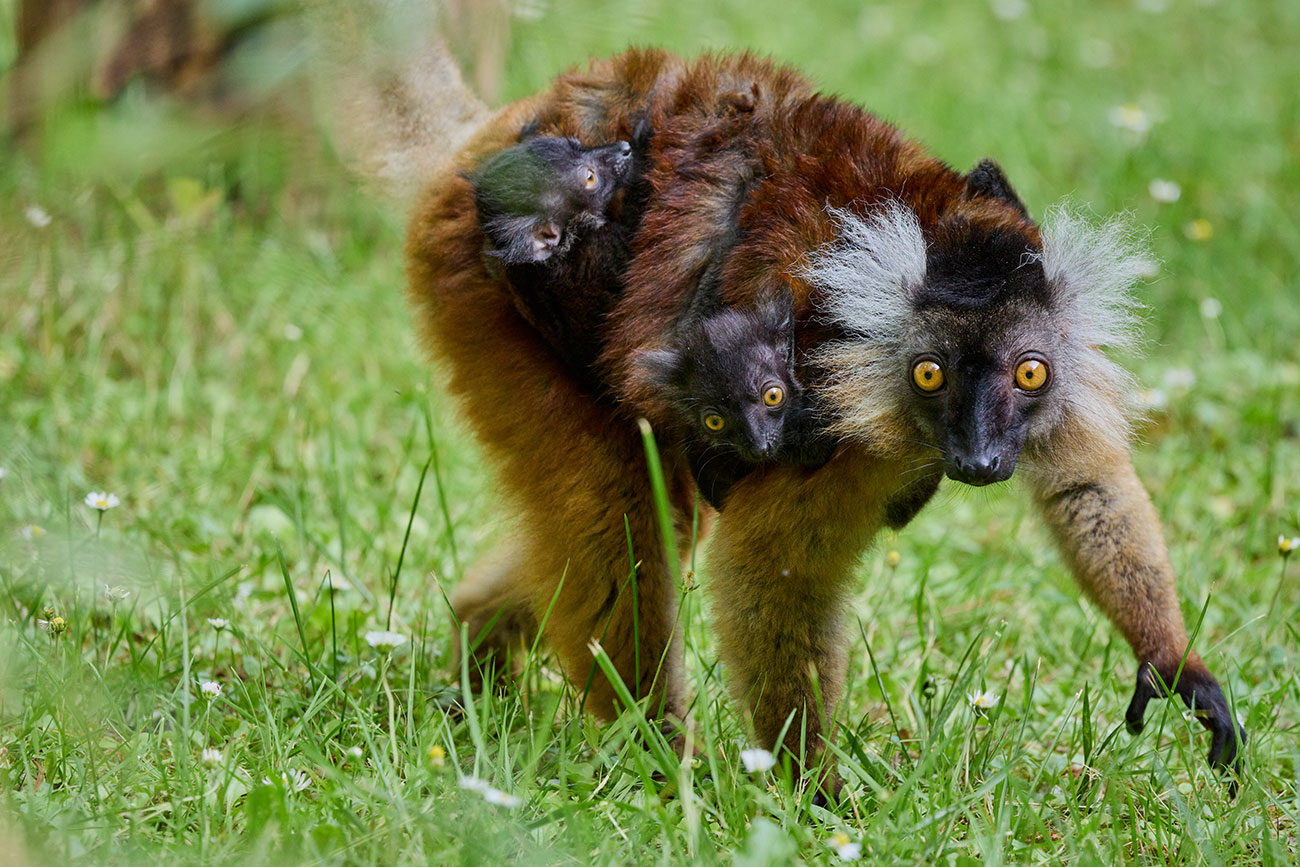
Our pair of Black lemurs recently gave birth to twins. These are not only the first offspring for this female, but also a first for us, marking our first birth of black lemurs since the species' arrival at the end of 2025 !
The Black lemur inhabits the lowland and mid-altitude rainforests of the Sambirano region in northwestern Madagascar. The species is sexually dichromatic: males have entirely black fur, while females are reddish-brown with tufts of white hair on their ears.
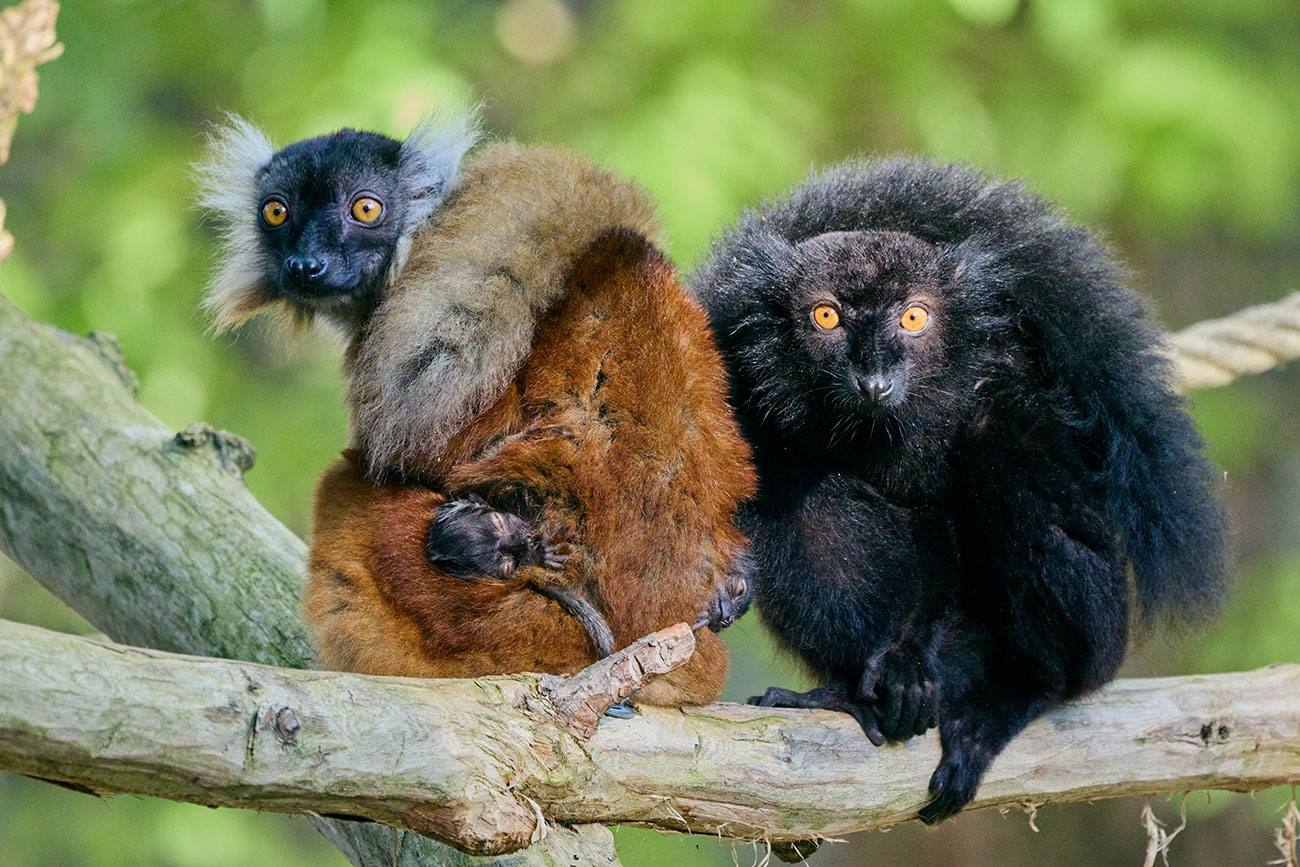
Fruit makes up the bulk of its diet, making the Black lemur an important seed disperser and significant pollinator therefore a key player in maintaining the dynamics of forest ecosystems.
In Madagascar, mating takes place in the spring and births occur in the autumn, after a gestation period of approximately four months. The female usually gives birth to a single offspring, occasionally two (mainly in zoos). The baby clings to its mother's belly before gradually moving onto her back as it develops. Weaning generally occurs around six to seven months of age.
Classified as Endangered on the IUCN Red List, the species is declining due to habitat destruction, poaching for its meat, and the trafficking of babies.
The population of 154 individuals hosted in European zoos, which now includes the twins born at La Palmyre Zoo, is subject to coordinated management that contributes to the long-term conservation of the Black lemur and raises public awareness of the threats to Malagasy biodiversity.
La Palmyre Zoo and Palmyre Conservation have long been committed to supporting associations protecting lemurs in Madagascar. They fund Helpsimus, which protects greater bamboo lemurs and red-bellied lemurs in the southeast of the island, as well as IMPACT Madagascar and Antongil Conservation, which protect red ruffed lemurs in the northeast, near Maroantsetra.