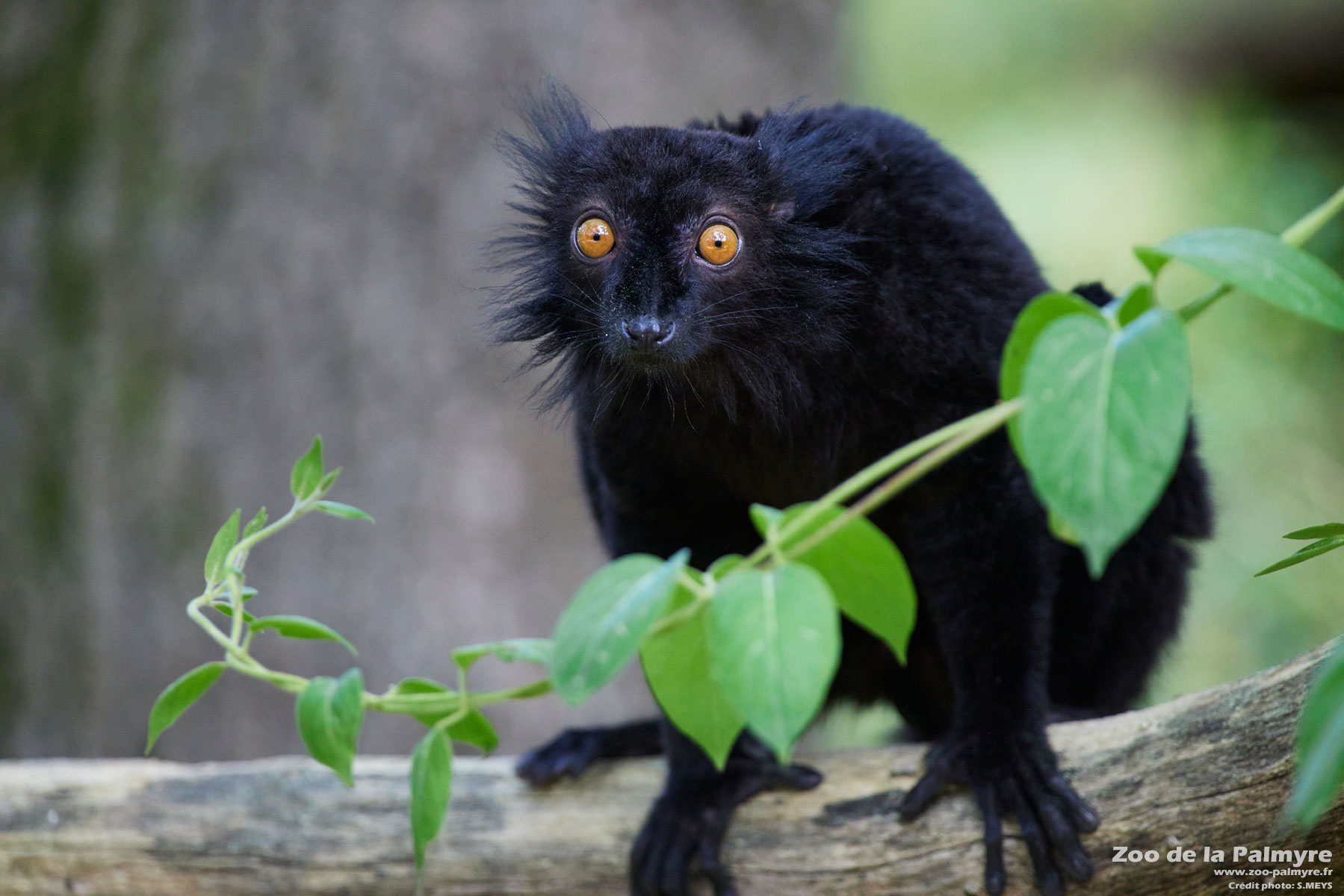
Black Lemur

Black Lemur
-
Class
Mammalia -
Order
Primates -
Familly
Lemuridae
-
 39-45 cm
 -
 1.9-2 kg
 -
 125-127 days
 -
 1 young
 -
 15-20 years (20-25 years in zoos)
-
Diet
fruits, young leaves, flowers, nectar, occasionnally insects -
Habitat
tropical forest -
Range
northwestern Madagascar -
 This species is part of a European Breeding Program
-
Population in the wild
En diminution -
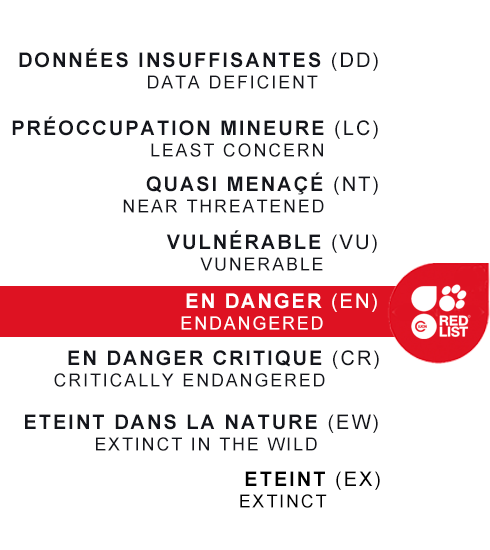
IUCN REDLIST status

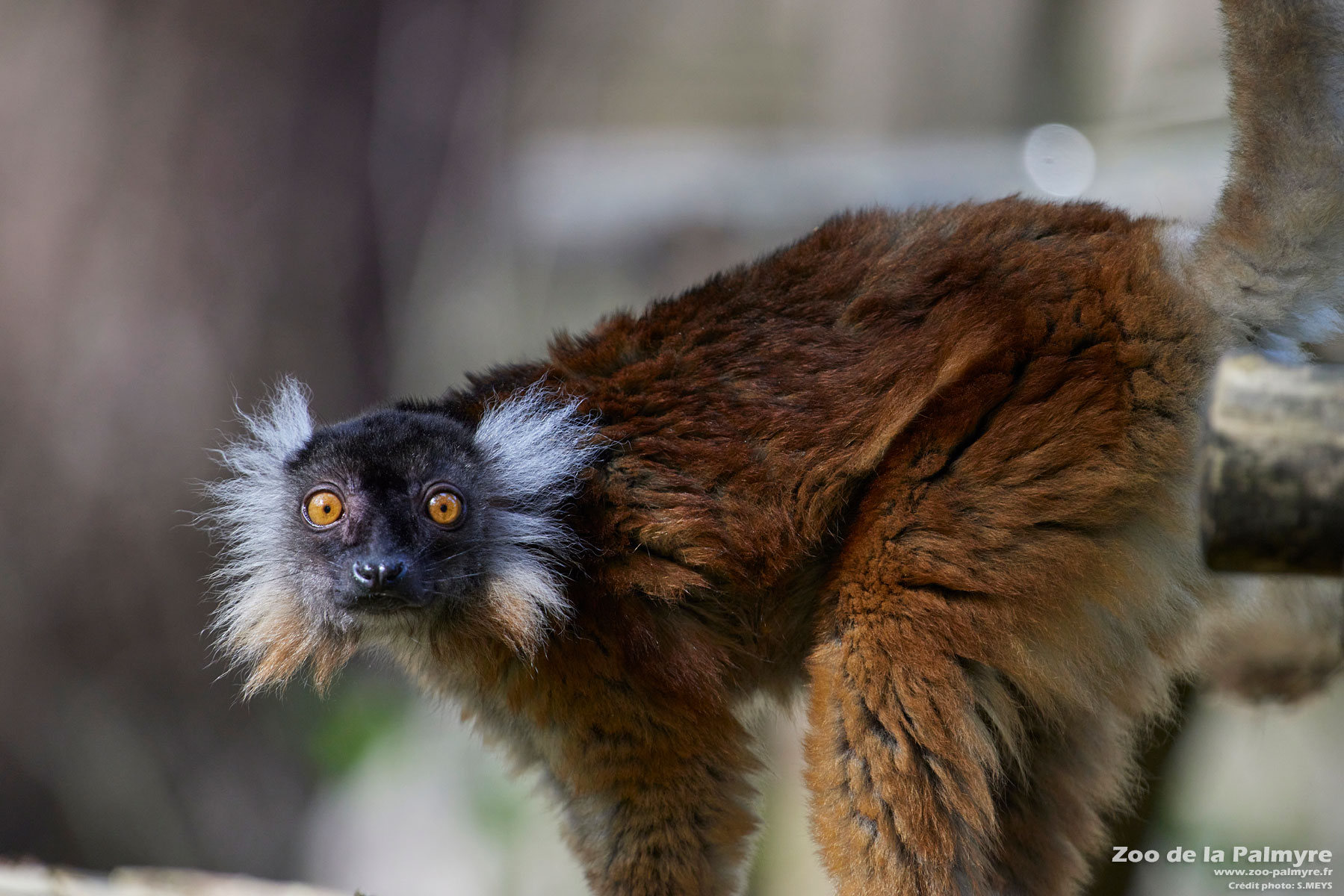
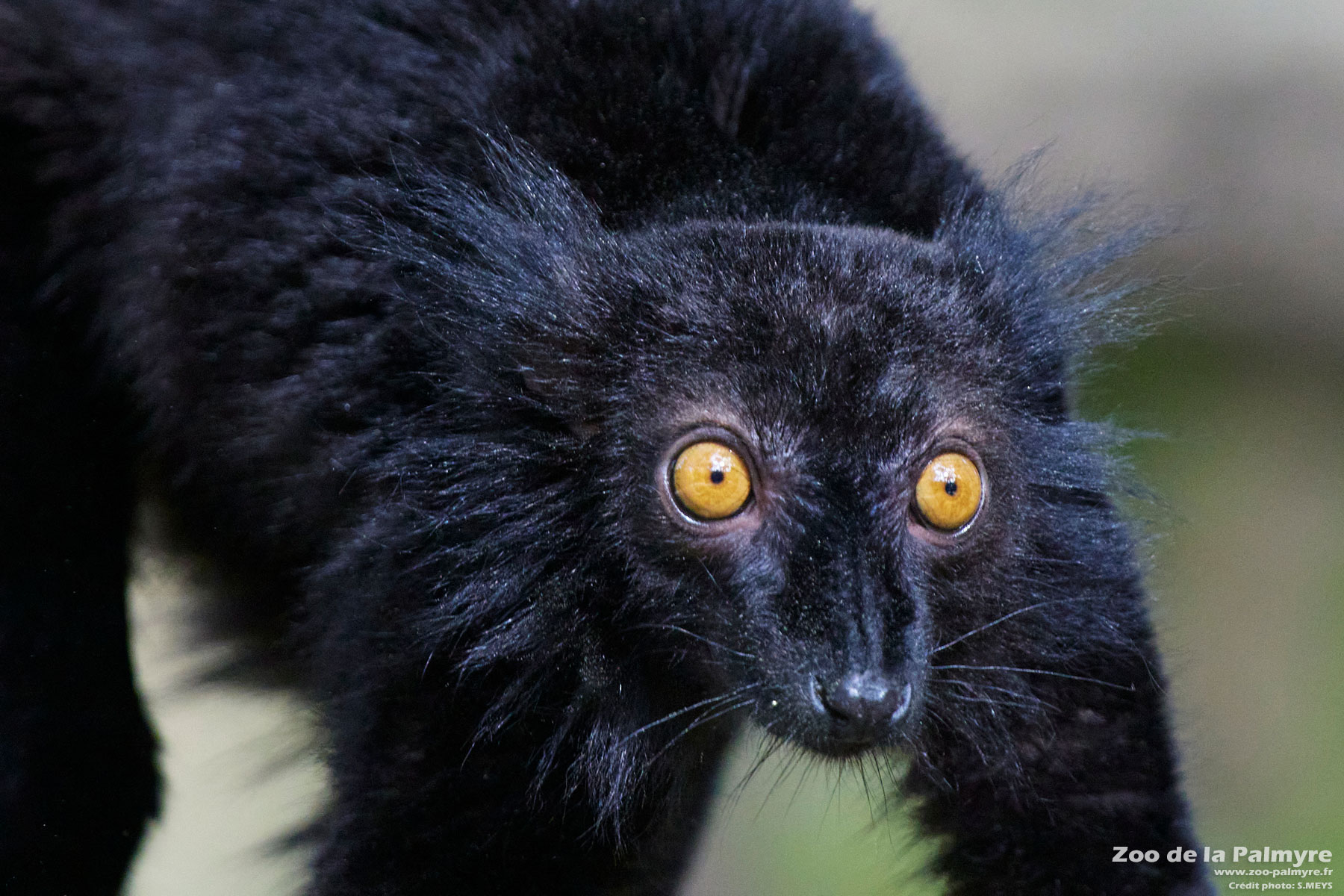
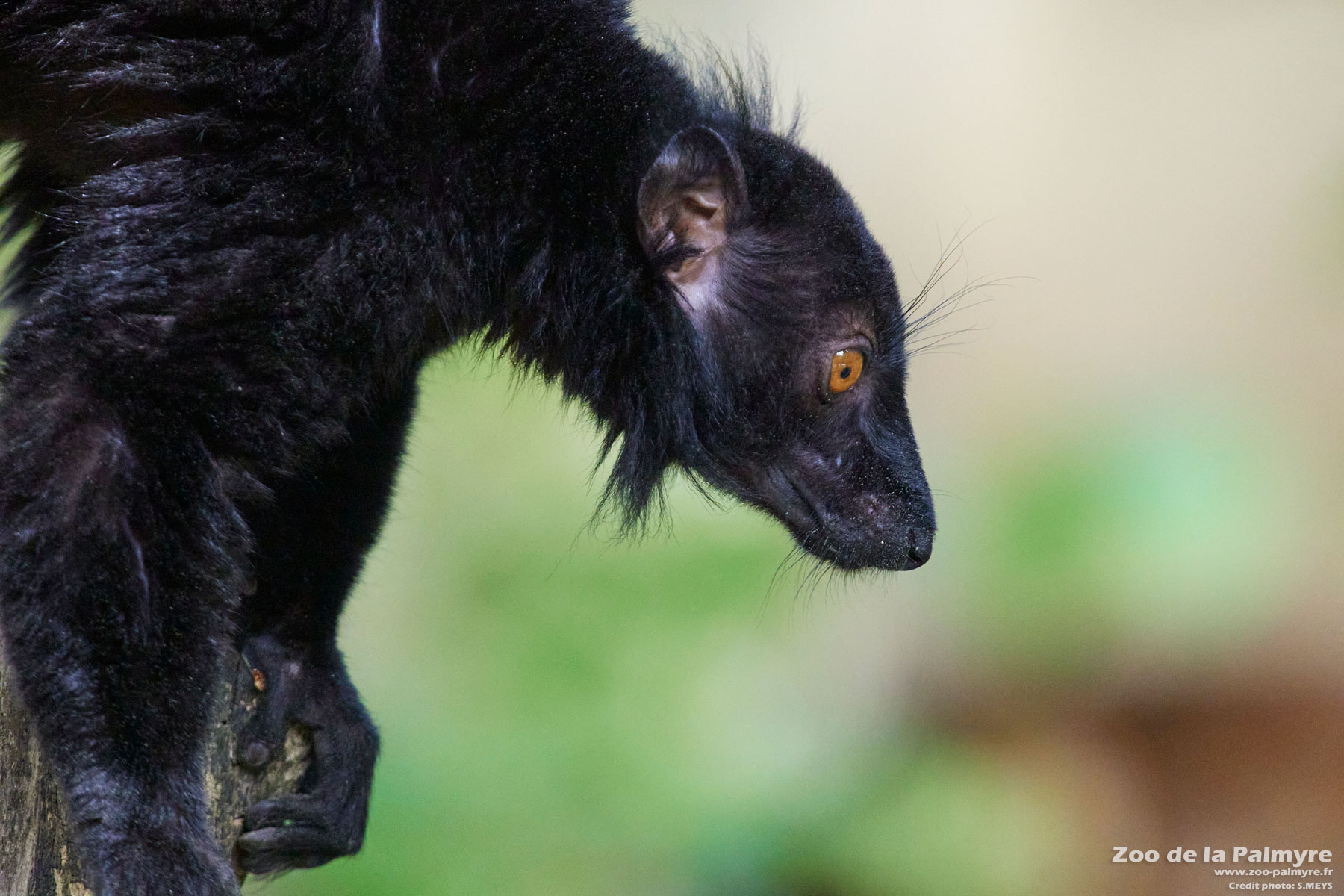
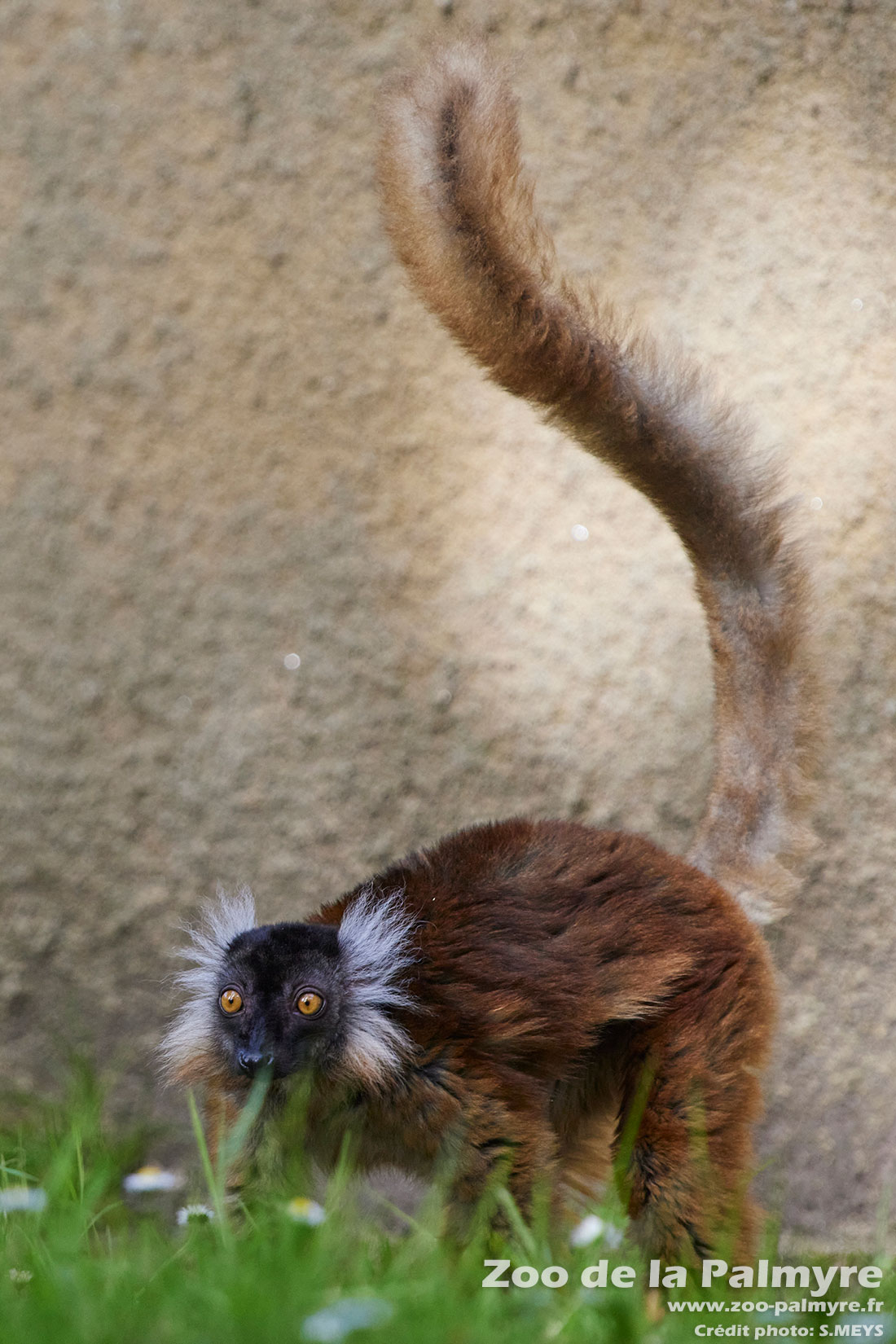
Males have a black coat, while females display chestnut fur with a creamy-white ventral coat as well as black muzzle and legs. Tufts of black fur in males and white fur in females frame their face up to above the ears. The dichromacy between the two sexes is so pronounced that it long led scientists to believe they were two different species!
Black lemurs have four toes with an opposable pollex on each hand and each hind foot has four toes with an opposable hallux. All fingers have nails except the second toe on the hind foot where the nail is replaced by a grooming claw.
Black lemurs live in multimale multifemale groups of two to fifteen individuals, with adult females forming the core of the family and dominating the males. Active both day and night, they feed primarily on ripe fruit, which can make up 60 to 90% of their diet depending on the season.
The species is known to rub the toxic secretions of venomous millipedes on its fur: it gently bites the millipede repeatedly until it secretes the toxins, then coverits bodys itself with the toxins which are believed to have insecticidal properties beneficial to lemurs.
When moving through the canopy, black lemurs use quadrupedal locomotion or leap from tree to tree. They are extremely agile and can leap up to 6-8 meters! They can also hang by their feet when feeding.
They mark their territory using vocalizations and scent marking. Both males and females mark elements of their environment using glands located in their anogenital region. The male also uses glands located on his hands and head.
In Madagascar mating takes place in the spring and the female gives birth to a single offspring between September and October after a gestation period of approximately 4 months. The young is exclusively carried on its mother’s belly for the first 4 to 5 weeks, then starts climbing onto her back. Weaning occurs at 6-7 months and sexual maturity at about 2 years of age.
The species is classified as Endangered on the IUCN Red List. It is threatened by habitat loss and fragmentation, as well as poaching for its meat and the illegal pet trade. Yet it plays a vital rôle as a seed disperser and pollinator, scattering seeds and nectar from the flowers it eats.
And in the wild